Reclaiming the Pen: 5 Steps to Writing a Book that Honors Your Narrative

Sister, let’s have a heart-to-heart.
How many times have you started a story, only to tuck it away in a drawer (or a hidden folder on your laptop) because a tiny voice whispered, “Who are you to tell this?” or “Nobody is going to get it”?
Maybe you’ve felt the weight of the "white gaze" pressing down on your pages, making you feel like you have to explain your culture, water down your truth, or, worse, act like your everyday magick isn't worthy of a hardback cover.
I’m here to tell you: The wait is over.
At Byrd’s World Publishing, we believe that for women of color, the educators, the healers, the grandmothers, and the dreamers, writing a book isn't just about "getting published." It’s about liberation. It’s about taking that pen back from the gatekeepers and the system that tried to erase us and saying, “I am the author of my own mythos.”
We (re)claim the pen. It’s a spiritual ritual, a healing journey, and a badass movement all rolled into one. (And yes, I’m bringing out the pom-poms for you because you deserve to be celebrated!) 📣✨
Are you ready to stop holding your breath and start writing your truth? Take a deep inhale... and let's walk through these 5 steps together.
1. Centering Your Magick & Rewriting Archetypes
For too long, the stories we’ve been given, the "classics," the fairy tales, the hero's journeys, weren't built for us. They were built for someone else's gaze. But Sister, your brilliance requires new archetypes.
On of my sisters, Mallory, the visionary behind Fairy Tales for Sun Kissed Women, says it best:
> “I write fairy tales because we as women require new archetypes to guide the evolution of our spirit... We deserve joy, we deserve magic, and we deserve to heal. I wanted new narratives liberated from an external gaze that would tell us this is how our stories are supposed to unfold.”
When you reclaim the pen, you aren't just writing a book; you’re decolonizing your imagination. You’re giving yourself permission to live "happily ever after" on your own terms. Whether you’re writing a memoir, a business guide, or a collection of poetry, ask yourself: Am I writing this for me, or am I trying to fit into a box someone else built?
There is an inherent magick in women of color that cannot be taught. When we center that magick, we don’t just change our own lives, we shift the frequency for everyone around us. (Think Wakanda, but for your bookshelf! 🙅🏾♀️✨)

2. Finding Your Sanctuary (Choosing Community over Isolation)
Let’s be real: the "lone genius" myth is a lie. Writing in isolation is hard, and for us, it can be dangerous.
Maybe you’ve been in writing groups before where you were the "only one." Maybe, you’ve even experienced the trauma of having your work misunderstood or, heaven forbid, stolen by those who didn't respect your voice.
No, thank you. ✋🏾
Reclaiming the pen means reclaiming your boundaries. It means protecting your intellectual property, guarding your creative energy from extraction, and choosing a "safe harbor", a communal writing space where you don't have to code-switch.
When you stop trying to do it alone, the "stuckness" can begin to melt. Writing in a sisterhood should be a part of the practice. When we push each other forward, we ensure that no story gets left behind.
3. Unhushing Your Truth (Preserving Ancestry & Everyday Life)
What are the stories you carry in your bones? The ones your grandmother whispered? The ones that happen in the quiet moments of your kitchen or your garden?
Too often, we think our "ordinary" lives aren't "big" enough for a book but let's be honest, your life is a sacred text. Your "why" might be to tell the truth to children who have only ever heard unrealistic endings.
Reclaiming the pen means acting as a preservationist for your lineage. It means deciding that your everyday joys, transformative heartbreaks, and "night blooms" are worth being archived for the generations coming after you.

4. Reclaiming Your Breath (Healing as the Foundation)
At BWP, we have a golden rule: Healing First, Writing Second, Movement Third.
If you’re coming to the page carrying the exhaustion of being erased, being told your story "doesn't have a market," or receiving feedback that tries to reshape your truth so it fits a white gaze, the words won't flow. You have to breathe first.
One of our sisters, reminds us that for so many years, we’ve been holding our breath just to survive. Your book can be born out of rest. It can be born out of a Morning Pages ritual that prioritizes your spirit over your word count. When you reclaim your breath, you reclaim your power to tell the story without burning out.
(Quick check-in: Are your shoulders up by your ears right now? Drop 'em. Take a full-body exhale. There we go. 🌬️✨)
5. Self-Naming & Movement Building
Finally, reclaiming the pen means reclaiming your Name.
In the Yoruba tradition, an Oríkì is like a praise poem, a way of naming yourself and your lineage to call forth your power. I start my own sessions with mine:
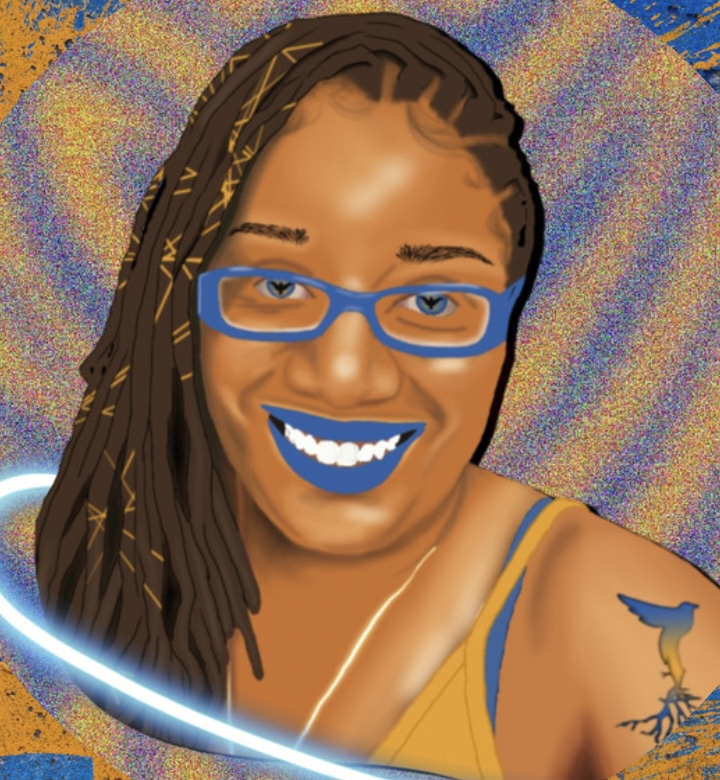
> “I am Heather 'Byrd' House of Roberts, first of my name, giver of giggles and hugs, catalyst of voice, story and badassery, Queen of quirky...”
When you name yourself, you take up space, and when you take up space on the page, you're building a movement.
Every day you sit with your story locked inside you is another day the world misses out on the transformation only you can provide. Your book is the vehicle; liberation is the destination.

Are You Ready to Reclaim the Pen?
Look, you’ve done the inner work. You’ve carried the story. Now, it’s time to let it out in a space that honors your brilliance and protects your peace.
No more writing alone. No more performing for audiences that don’t understand your context or asking you to "fix" what was never broken. Just deep connection, structured support, and a pathway to your next chapter.
I Want In! 🙋🏾♀️✨
Say YES to your story and join our next Open House.
Let’s turn your message into a movement. We’ve got the pom-poms ready.
Inhale. Exhale. Now... let’s write. ✍🏾🕊️